
Every Dataset Tells Part of the Story.
Across the world, organisations such as the World Health Organization (WHO), UNICEF, the World Bank, national governments, and research programmes generate vast amounts of valuable public health data. Individually, these datasets provide important insights. Together, they become a powerful foundation for evidence-based research, programme planning, policy analysis, and decision-making.
Evidence Hub brings these diverse sources together to help researchers and decision-makers explore evidence from multiple perspectives, identify patterns, validate findings, and generate richer insights.
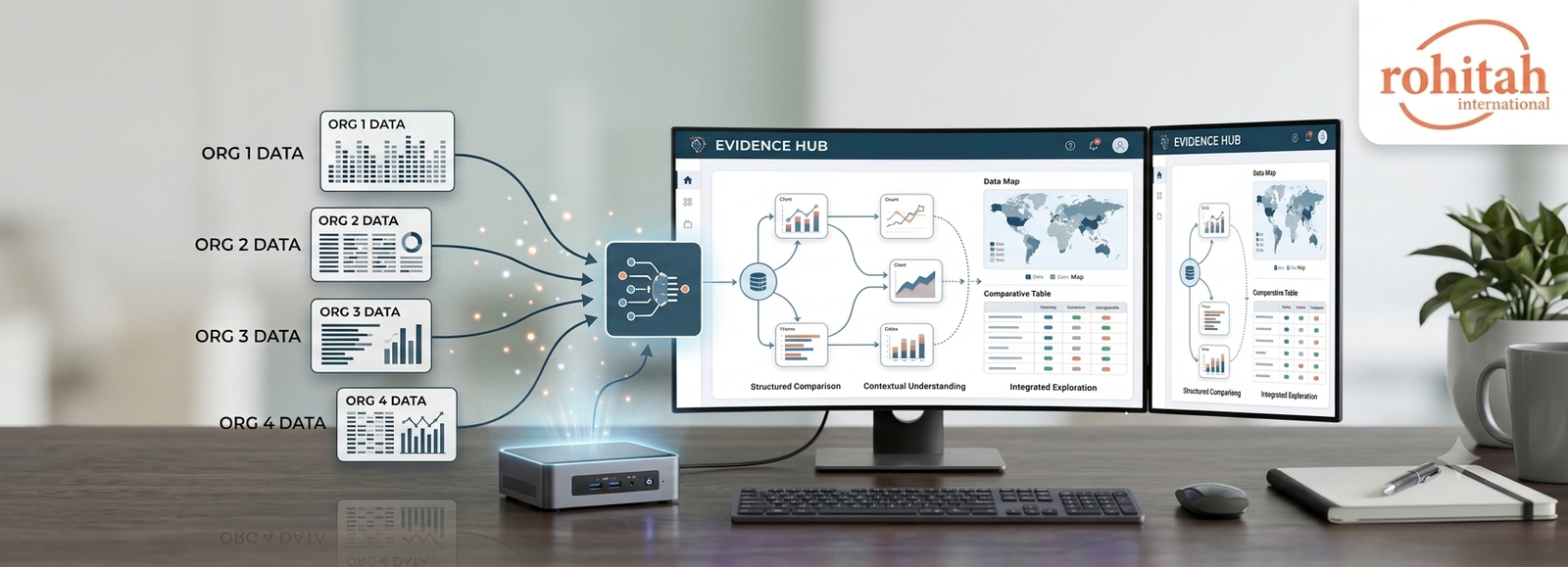
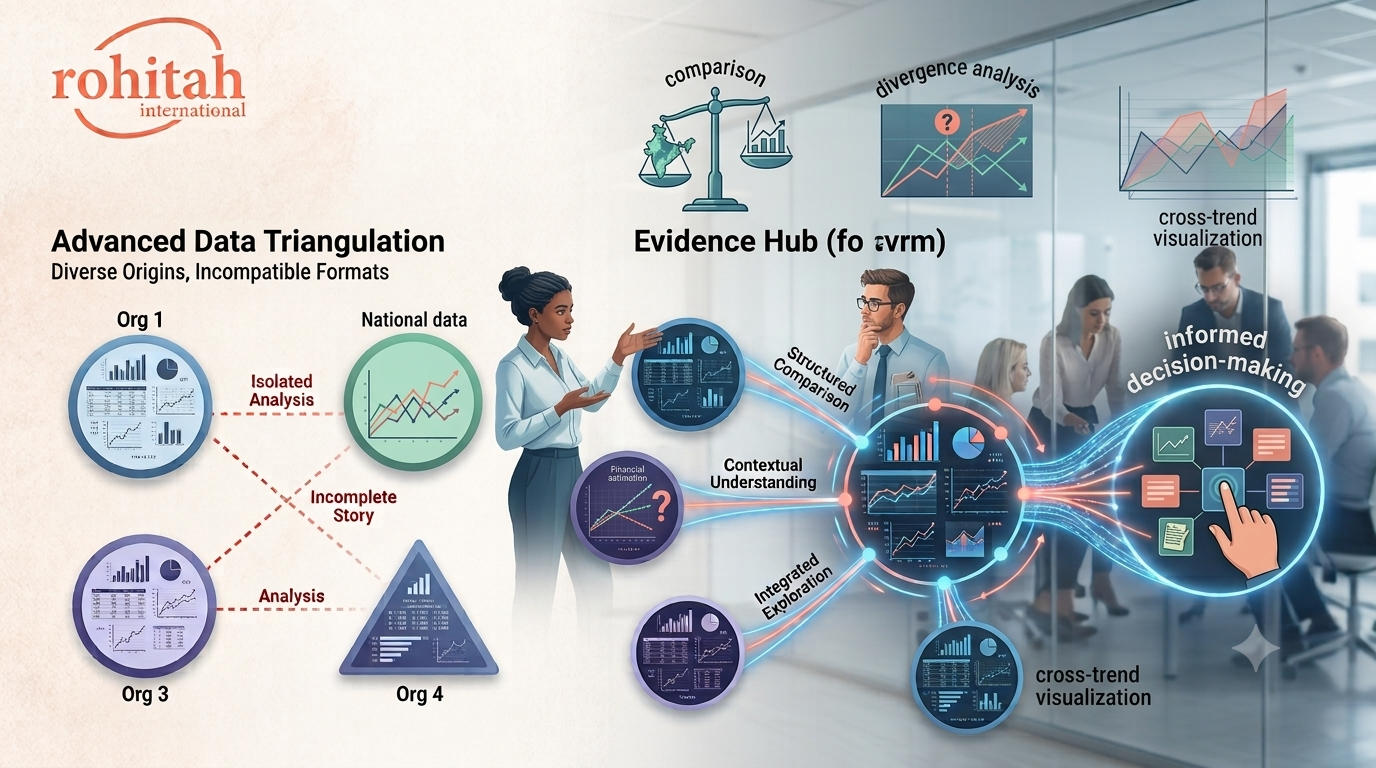
No single dataset tells the complete story. Different organisations collect data for different purposes, using different methodologies, reporting periods, sampling strategies, and indicator definitions. Each contributes valuable evidence, yet meaningful insights often emerge only when these sources are viewed together.
Evidence Hub helps organisations move beyond isolated datasets by enabling structured comparison, contextual understanding, and integrated evidence exploration.
Evidence Hub is built on three simple beliefs.
Each organisation contributes an important perspective. The objective is not to determine which dataset is "correct," but to understand what each contributes to the broader evidence landscape.
Numbers become more meaningful when interpreted alongside complementary evidence from multiple trusted sources. Context strengthens interpretation.
The strongest decisions rarely rely on a single indicator or a single database. They emerge from the thoughtful integration of multiple sources of evidence.
Every perspective improves understanding.
Data Triangulation helps researchers, analysts, and programme teams unlock new value from existing evidence.
Create comprehensive country summaries by bringing together indicators from multiple trusted international sources. Understand health status, programme performance, demographic trends, and development indicators within a single evidence environment.
Explore how similar indicators differ across organisations, reporting systems, and methodologies. Understand variation rather than simply observing it.
Compare survey findings, programme data, or monitoring results against established national and international benchmarks. Identify unexpected deviations and explore possible explanations.
Analyse changes across years, countries, and regions to better understand long-term programme performance and health outcomes.
Provide contextual evidence for manuscripts, grant proposals, systematic reviews, implementation research, and policy analyses.
Support evidence-informed planning by combining operational data with global reference datasets.
Data Triangulation is designed to work with trusted national and international evidence sources, including:
The platform is designed to grow as new evidence sources become available.
Access contextual evidence for publications, implementation research, and comparative analyses.
Generate integrated country profiles to support programme planning and policy development.
Compare programme indicators across countries, reporting systems, and implementation periods.
Validate routine programme data against external evidence sources.
Strengthen planning through richer contextual understanding.
Explore global health indicators through an integrated evidence environment that supports learning and analysis.
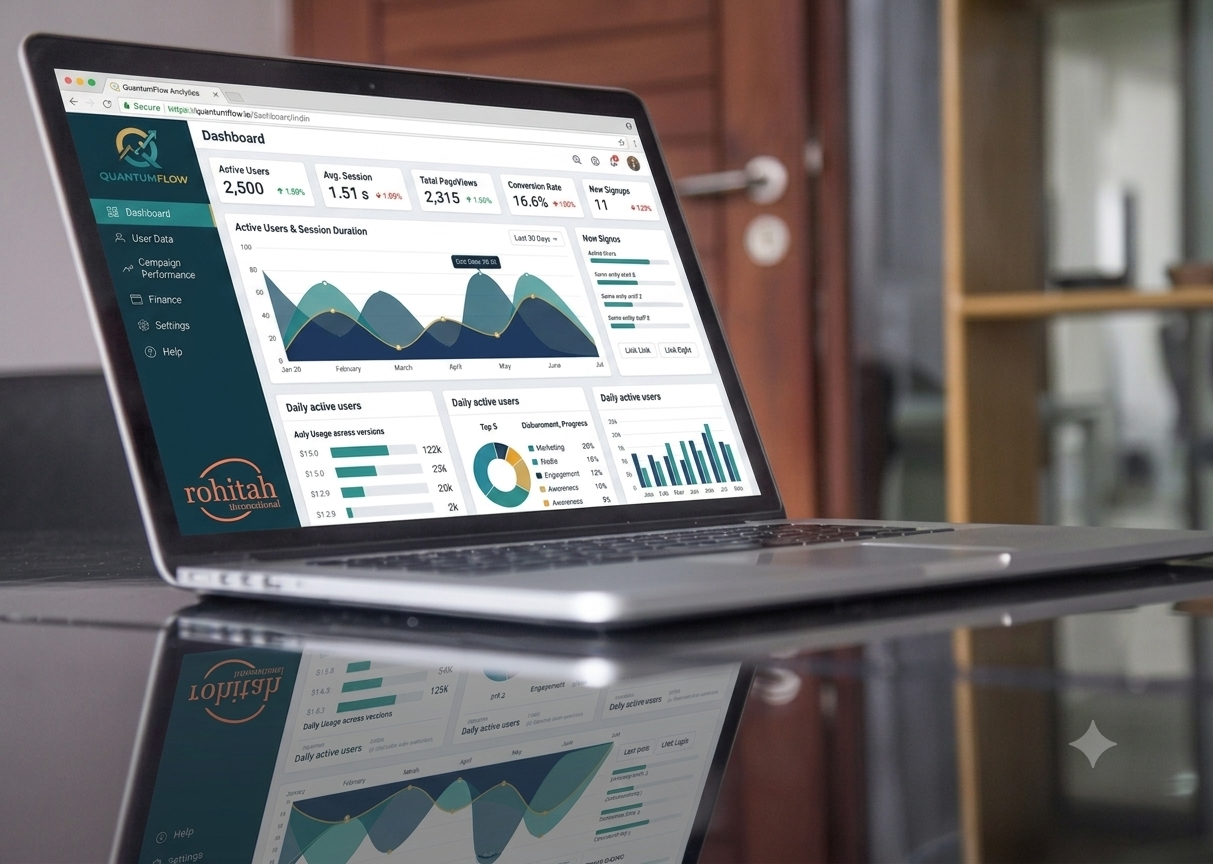
Data Triangulation is not simply about bringing datasets together. It is about helping users ask better questions.
Instead of Asking"What does this dataset contain?"
Users can ask:
Future capabilities may include:
The objective remains unchanged: helping organisations make better use of existing evidence.
Evidence Hub is part of Rohitah Solutions—an Innovation Lab for Evidence Intelligence, developing evidence systems that strengthen data collection, data quality, evidence integration, and decision support. Together, these solutions support the complete evidence lifecycle:
Help collect reliable data.
Strengthens confidence in quantitative data.
Strengthens qualitative evidence.
Connects evidence across systems.
Transforms connected evidence into actionable intelligence.
No. It is an evidence intelligence platform designed to connect, compare, and contextualise information from multiple trusted sources.
No. It complements existing systems by helping users explore relationships between different sources of evidence.
No. While initially focused on public health and development, the underlying approach can support any domain where multiple evidence sources contribute to better decision-making.
Yes. The long-term vision includes the ability to combine organisational datasets with publicly available evidence to generate richer analytical insights.
The world's most valuable datasets already exist. The challenge is bringing them together in ways that improve understanding. Data Triangulation helps transform distributed information into connected evidence—supporting researchers, programme teams, governments, and development partners in making more informed decisions.
Explore Evidence HubRohitah Solutions is an Innovation Lab for Evidence Intelligence, developing evidence systems that strengthen data collection, data quality, evidence integration, and decision support across research, public health, and development. Powered by responsible AI and grounded in practical implementation experience, every solution contributes to a shared mission of better evidence and better decisions.